Tousif
Islamতৌসিফ ইসলাম
- Gravitational PhysicsNumerical relativity, black hole perturbation theory, gravitational self-force, gravitational-wave astronomy, dynamical formation of binary black holes in dense star clusters
- Interpretable AIAgentic AI, symbolic discovery, scientific LLM benchmarking, LLM skills for science
- Scientific ComputingSurrogate modeling, high-performance computing, Bayesian inference

About
Me
I develop fast, accurate models of merging black holes using numerical relativity, black-hole perturbation theory, and gravitational self-force methods. I use these models to study strong-field gravity, extract astrophysical information from gravitational-wave observations, and explore how agentic AI can accelerate scientific computing and discovery.
Postdoctoral Trajectories
- Weinberg Fellow, Weinberg Institute for Theoretical Physics, University of Texas at Austin, with Digvijay Wadekar at the Center for Gravitational Physics2026–
- Visiting Member, Institute for Advanced Study, with Matias Zaldarriaga2026–
- Kavli Postdoctoral Scholar, Kavli Institute for Theoretical Physics (KITP), University of California, Santa Barbara, with Tejaswi Venumadhav and Lars Bildsten2023–2026
- Long-term visitor, Theoretical Astrophysics Including Relativity (TAPIR) group, Caltech, with Saul Teukolsky2024–2025
Educational Geodesic
- PhD, Computational Sciences, University of Massachusetts Dartmouth, advised by Scott Field and Gaurav Khanna2019–2023
- MS, Data Science, University of Massachusetts Dartmouth, advised by Scott Field2019–2023
- Long-Term Visiting Student, International Centre for Theoretical Sciences (ICTS–TIFR), with Parameswaran Ajith2018–2019
- BS-MS, Physics, Indian Institute of Science Education and Research (IISER) Kolkata2013–2018
Collaboration
- Member, IAS GW Pipeline
- Member, SXS Collaboration
- Member, NSF CosmicAI Accelerated Universe Working Group
- Member, LIGO Scientific Collaboration
- Member, LISA Consortium
Selected contributions
Problems I’ve tackled, methods I’ve developed, and discoveries I’ve helped make possible.
01
Mapping the hierarchy of nonlinearity in black hole dynamics
I developed
gwTeukolsky, a modular, tiered small-mass-ratio perturbative framework for simulating binary black hole mergers, and systematically benchmarked its predictions against fully nonlinear numerical relativity simulations. I investigate how nonlinear effects emerge from perturbative dynamics and which physical corrections become important at different stages of binary evolution, from inspiral through merger. This work also introduces theVishveshwara Catalog, the first public catalog of black-hole perturbation theory waveforms, containing 1,525 simulations across 346 binary configurations, including precessing systems.02
Bridging perturbation theory and numerical relativity with two scaling parameters
Numerical relativity (NR) accurately models comparable-mass black hole mergers but becomes computationally expensive at large mass ratios, while black-hole perturbation theory (BHPT) is formally valid in the extreme-mass-ratio limit. I demonstrated that BHPT simulations can nevertheless reproduce key features of comparable-mass mergers through a simple two-parameter rescaling of time/frequency and amplitude. This unexpected relationship, now known as the α–β scaling, provides an inexpensive bridge between two traditionally distinct regimes of black hole dynamics.
03
A universal fingerprint of eccentric black hole mergers
Using computationally expensive numerical relativity simulations, I demonstrated that eccentricity imprints approximately the same modulation across gravitational-wave modes and other radiative quantities. This discovery enables higher harmonics to be reconstructed from the quadrupole's eccentric modulation at a fraction of the computational cost, forming the basis of
gwNRHME, a framework for extending eccentric waveform models to include higher modes. It also led to the development of a gauge-independent definition of orbital eccentricity directly from gravitational waveforms.04
The first inference of a large black hole recoil from gravitational waves
Gravitational-wave observations can reveal the recoil velocities of black holes formed in mergers. Using numerical relativity surrogate models for gravitational waveforms and remnant properties, we reported the first observational evidence for a large gravitational-wave recoil, inferring a kick of approximately 1,500 km/s for GW200129. In a follow-up study, we identified another candidate, GW191109, with an inferred recoil velocity of approximately 500 km/s. These results open a new, indirect observational window onto the astrophysical environments in which black hole binaries form and the possibility of hierarchical black hole mergers.
05
AI agents discover interpretable analytic models of black hole mergers
Traditional waveform surrogates reproduce expensive numerical simulations with remarkable accuracy but often sacrifice interpretability, while first-principles analytic models struggle to describe the complete inspiral–merger–ringdown evolution. To bridge this gap, I developed
gwAgent, a physics-informed, large-language-model-based agentic framework that combines known analytic limits, physical reasoning, symbolic modeling, and numerical validation to discover compact, closed-form surrogate models of binary black hole waveforms. The resulting analytic surrogates outperform conventional machine-learning approaches and traditional symbolic regression methods in the benchmarks considered, demonstrating how AI agents can contribute to interpretable scientific model discovery rather than merely automate coding. Building on this work, I also developedgwBenchmarks, a framework for stress-testing the ability of current LLM agents to carry out end-to-end scientific research tasks in gravitational-wave astronomy.06
Reconstructing the origin of a runaway supermassive black hole observed by JWST and HST
Can general relativity reconstruct the merger history of a runaway supermassive black hole from its observed velocity alone? Recent observations with the James Webb Space Telescope (JWST) and Hubble Space Telescope (HST) have revealed evidence for RBH-1, a supermassive black hole apparently escaping its host galaxy at nearly 1,000 km/s. Using general-relativistic simulations and recoil models (
gwModels) I developed, we investigated which binary black hole mergers could produce such an extraordinary kick. We found that the observed velocity alone can significantly constrain the possible progenitor binaries, favoring mass ratios between 1 and 4 and substantial black hole spins with significant precession. This work demonstrates how relativistic merger modeling can complement electromagnetic observations to uncover the otherwise inaccessible histories of supermassive black holes.
In the press
Stories from my research that reached a wider audience, from runaway supermassive black holes to the recoil kicks that decide where black holes can merge again.
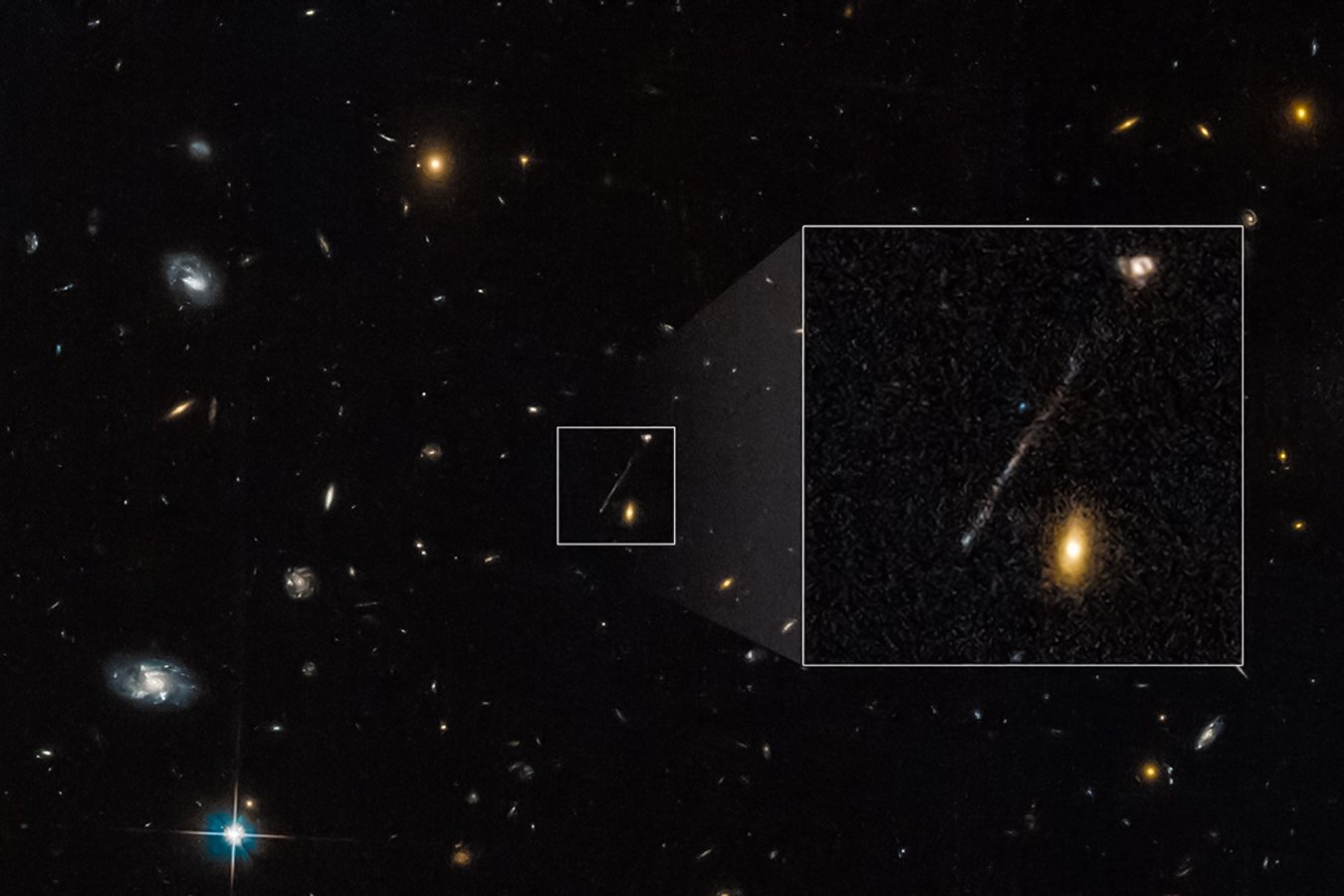
Image: NASA, ESA, Pieter van Dokkum (Yale), Joseph DePasquale (STScI)
Reconstructing the collision that launched a runaway black hole
Which supermassive black hole binary could have launched RBH-1, a runaway black hole traveling at nearly 1,000 km/s? Inspired by observations from the James Webb Space Telescope (JWST) and Hubble Space Telescope (HST), our paper reconstructs the possible binary progenitor of this remarkable event.
- Universe Today
- UT Austin News
- UCSB News
- Phys.org
- New ScientistResearch featured
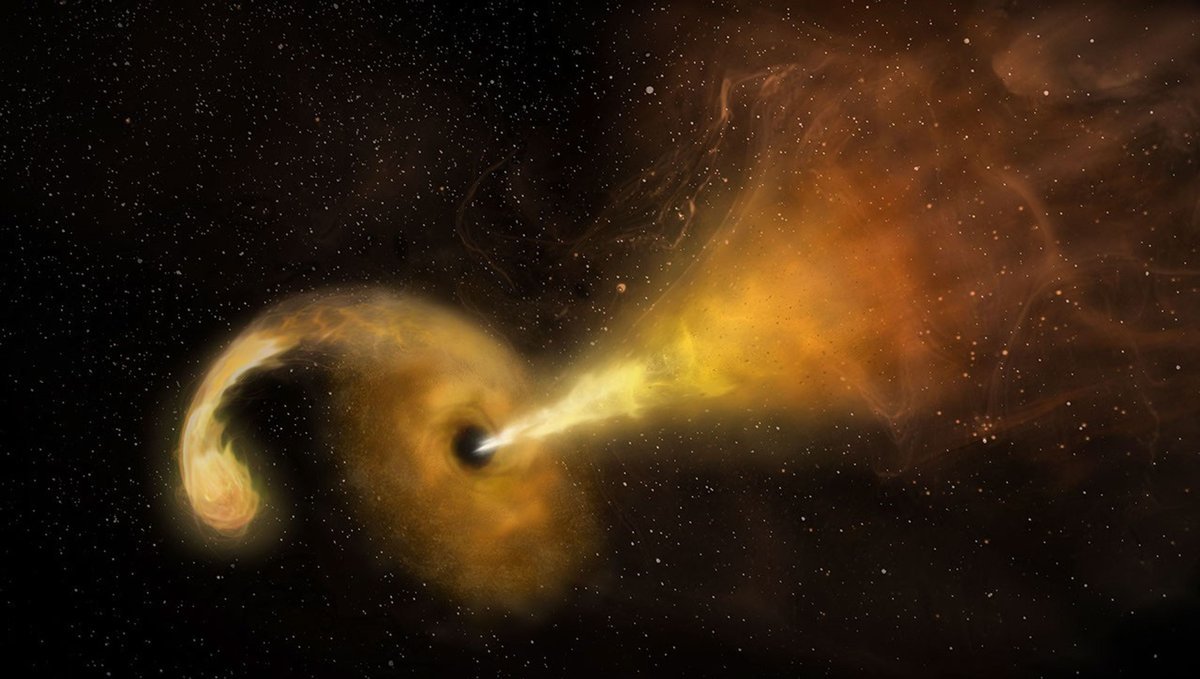
Image: NASA
Astronomers spot a wandering supermassive black hole
Scientific American on the best-yet example of a supermassive black hole wandering through its galaxy, with comments from me.
- Scientific AmericanQuoted
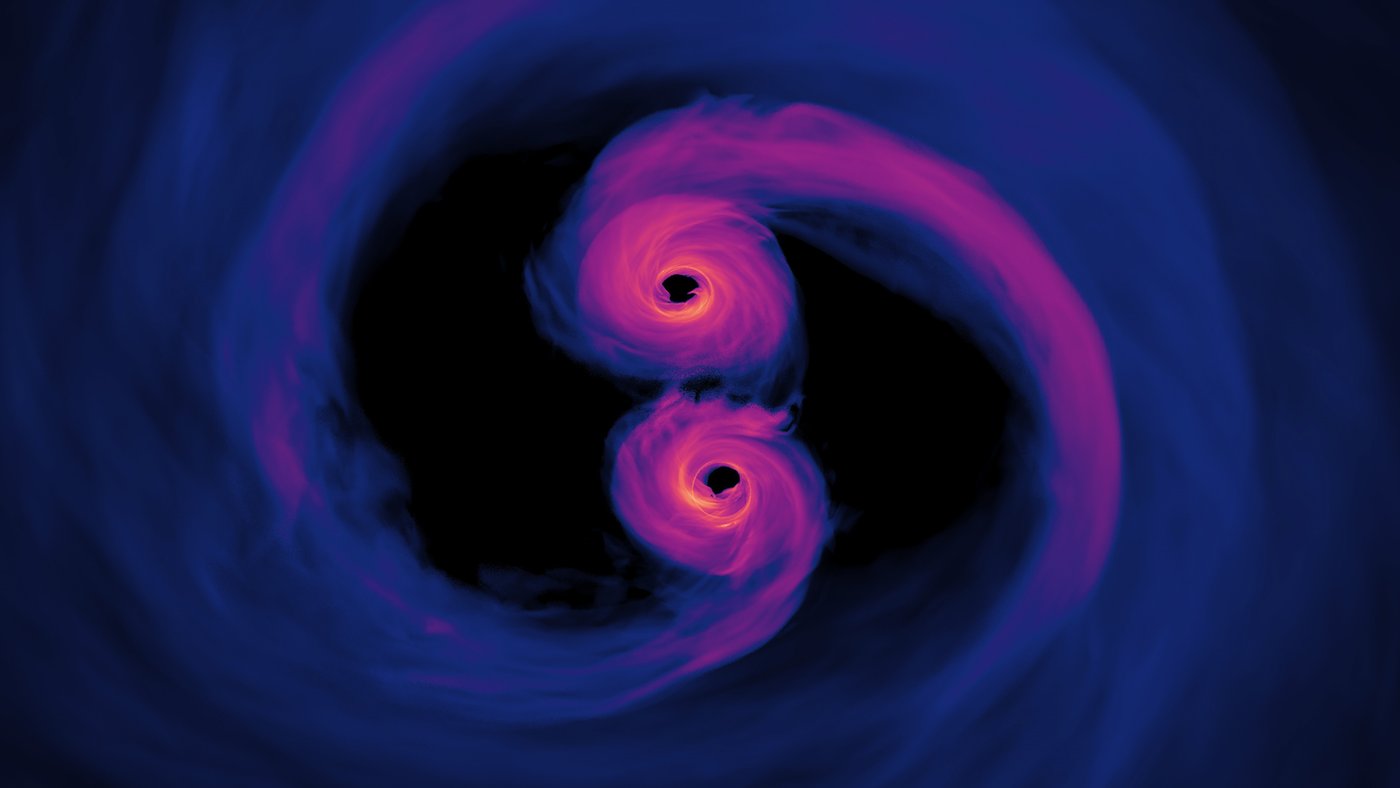
Image: NASA's Goddard Space Flight Center/Scott Noble; simulation data, d'Ascoli et al. 2018
Researchers study fast-moving black hole to better understand formation of black hole binaries
For the first time, we inferred a large recoil velocity of approximately 1,500 km/s for a black hole merger observed by the LIGO–Virgo–KAGRA collaboration, offering new clues about the binary's formation environment. Coverage of our study of this fast-moving black hole.
Professional
service
Referee, journals
- Physical Review Letters · Physical Review D2020–
- Nature · Nature Astronomy2025–
- The Astrophysical Journal · The Astrophysical Journal Letters2025–
Referee, AI/ML workshops
- ML4PS: Machine Learning and the Physical Sciences, NeurIPS, Atlanta2026
- Sim2Science: ML with Imperfect Scientific Models, NeurIPS, Paris2026
Elected positions
- Member-at-Large, Executive Committee, APS Division of Gravitational Physics2023–2027
- Treasurer, IISER Kolkata Alumni Association2020–2023
Collaborators worldwide
73 co-authors in 33 cities across 11 countries. Click a pin to see who is there.
List by city
- Ithaca, USACornell UniversityLawrence E. Kidder, Matthew Giesler, Keefe Mitman, Jooheon Yoo, Michael Boyle, Nils Deppe, William Throwe
- Pasadena, USACaltechJackie Lodman, Mark A. Scheel, Chad R. Galley, Jordan Moxon, Kyle C. Nelli, Nils L. Vu
- Dartmouth, USAUMass DartmouthVijay Varma, Scott E. Field, Feroz H. Shaik, Adhrit Ravichandran, Abhishek Ravishankar
- Potsdam, GermanyMax Planck Institute for Gravitational Physics (AEI)Abhirup Ghosh, Harald P. Pfeiffer, Guglielmo Faggioli, Alessandra Buonanno, Peter James Nee
- Princeton, USAInstitute for Advanced Study · Princeton UniversityJavier Roulet, Seth Olsen, Matias Zaldarriaga, Mark Ho-Yeuk Cheung, Zihan Zhou
- Baltimore, USAJohns Hopkins UniversityEmanuele Berti, Arush Pimpalkar, Benjamin Wandelt
- Cambridge, USAMITSylvia Biscoveanu, Salvatore Vitale, Scott A. Hughes
- Fullerton, USACalifornia State University, FullertonAndrea Ceja, Marlo Morales, Daniel Tellez
- Kingston, USAUniversity of Rhode IslandGaurav Khanna, Ritesh Bachhar, Michael Pürrer
- Kolkata, IndiaSaha Institute of Nuclear Physics · IISER Kolkata · West Bengal State UniversityKoushik Dutta, Khursid Alam, Md Arif Shaikh
- Rehovot, IsraelWeizmann Institute of ScienceJonathan Mushkin, Barak Zackay, Oryna Ivashtenko
- Austin, USAUT AustinKatie Rink, Digvijay Wadekar
- Mumbai, IndiaTata Institute of Fundamental ResearchPrayush Kumar, Akash Maurya
- New York, USAFlatiron InstituteMaximiliano Isi, Will M. Farr
- Rochester, USARochester Institute of TechnologyJacob Lange, Richard O'Shaughnessy
- Santa Barbara, USAUC Santa BarbaraTejaswi Venumadhav, Isha Anantpurkar
- Auckland, New ZealandUniversity of AucklandAvi Vajpeyi
- Bengaluru, IndiaICTS-TIFRParameswaran Ajith
- Birmingham, UKUniversity of BirminghamDavide Gerosa
- Chennai, IndiaChennai Mathematical InstituteAjit Kumar Mehta
- Cleveland, USACase Western Reserve UniversityKevin Gonzalez-Quesada
- Copenhagen, DenmarkUniversity of CopenhagenMaarten van de Meent
- Dublin, IrelandUniversity College DublinNiels Warburton
- Las Vegas, USAUniversity of Nevada, Las VegasCarl-Johan Haster
- Lisbon, PortugalCENTRA, University of LisbonHannes R. Rüter
- Long Island, USALong Island UniversitySteven L. Liebling
- Melbourne, AustraliaMonash UniversityRory Smith
- Oxford, USAUniversity of MississippiLeo C. Stein
- Palma, SpainUniversity of the Balearic IslandsAntoni Ramos-Buades
- Pune, IndiaIUCAABhooshan Gadre
- State College, USAPenn StateB.S. Sathyaprakash
- Stony Brook, USAStony Brook UniversityKonstantinos Kritos
- Urbana, USAUniversity of Illinois Urbana-ChampaignNoora Ghadiri