Numerical Relativity

Waveform Modelling

I have contributed to the development of the following gravitational waveform models developed using reduced order surrogate techniques:

  • Minor Contributor to EMRISur1dq1e4, a surrogate waveform model for extreme-mass-ratio-inspirals. The model is available through Black-Hole Perturbation Toolkit (BHPTK) and gwsurrogate python package. The data for the model is hosted here.
  • Lead Contributor to NRSur2dq1Ecc, a numerical relativity based surrogate waveform model for eccentric non-spinning binaries with equal masses. The model would soon be available through gwsurrogate.
  • Lead Contributor to NRSur2dq1Ecc+, a customized surrogate waveform model for eccentric non-spinning binaries with comparable masses up-to mass ratio q<=3. This model too will soon be available through gwsurrogate.
  • Lead Contributor to NRSur2dq1EccRemnant, a surrogate model for the remant properties of eccentric equal mass non-spinning binaries. This model will soon be publicly available through surfinBH.
  • Lead Contributor to BHPTNRSur1dq1e4, a surrogate waveform model for non-spinning extreme-mass-ratio-inspirals. The model is available through Black-Hole Perturbation Toolkit (BHPTK) and gwsurrogate python package. The data for the model is hosted here.
  • Major Contributor to BHPTNRSur2dq1e3, a surrogate waveform model for spinning extreme-mass-ratio-inspirals. The model is available through Black-Hole Perturbation Toolkit (BHPTK) and gwsurrogate python package. The data for the model is hosted here.
  • Lead Contributor to BHPTNRSur1dq1e4Remnant, a surrogate remnant model for non-spinning extreme-mass-ratio-inspirals. The model is available through BHPTNR_Remnant python package.
  • Lead Contributor to gwNRHME, a framework to seemlessly convert a (non-spinning) multi-modal circular waveform to eccentric waveform if the quadrupolar mode eccentric waveform is known. The framework is available through gwModels python package.
  • Lead Contributor to gwNRXHME, a framework to seemlessly convert a (spinning) multi-modal circular waveform to eccentric waveform if the quadrupolar mode eccentric waveform is known. The framework is available through gwModels python package.
  • Lead Contributor to NRHybSur3dq8-gwNRHME, BHPTNRSur1dq1e4-gwNRHME, IMRPhenomTHM-gwNRHME (non-spinning) multi-modal eccentric waveform models developed through the gwNRHME framework. These models are available through gwModels python package.

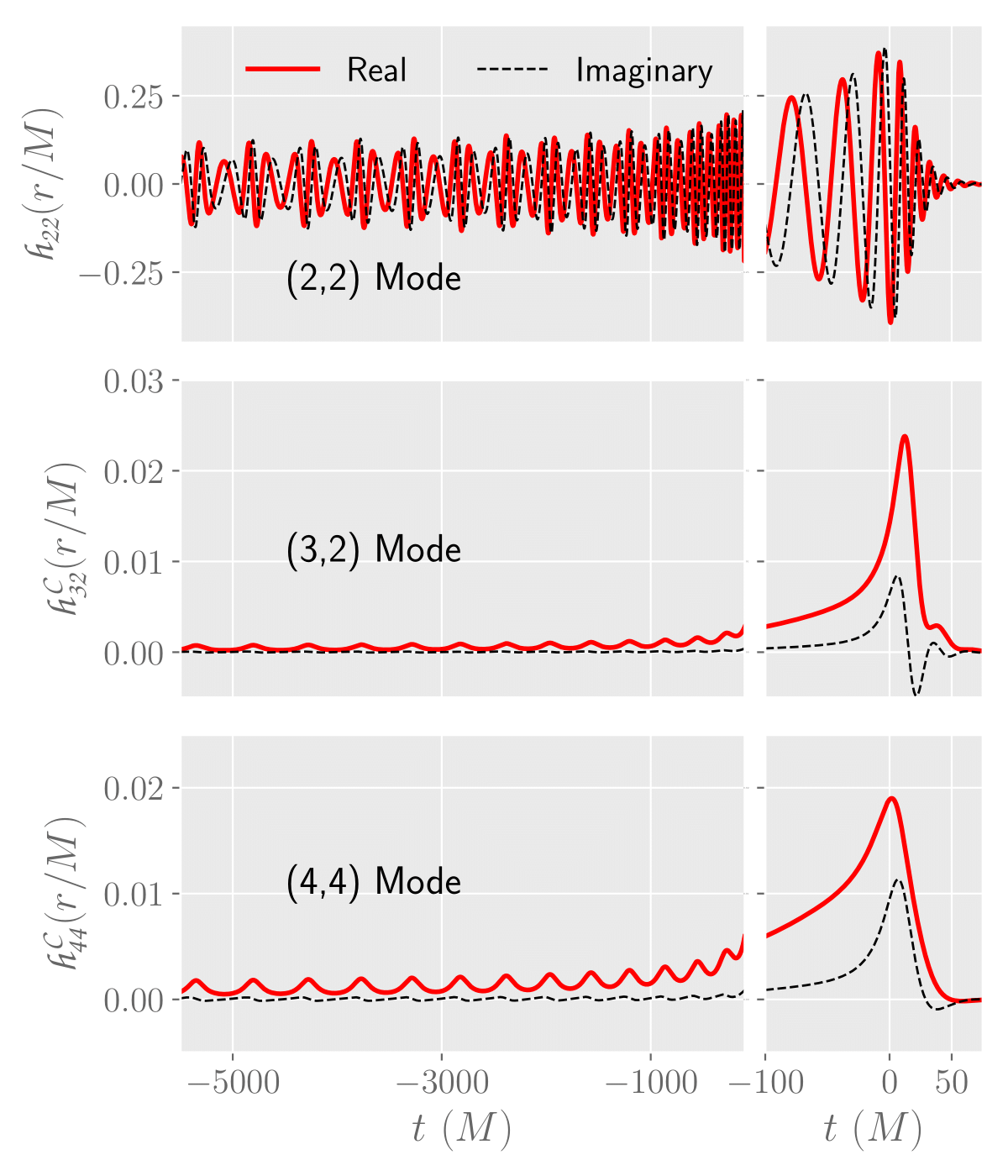
Eccentric NR-Surrogate Waveform Model

Eccentric binary black hole surrogate models for the gravitational waveform andremnant properties: comparable mass, nonspinning case.
Publications: arXiv.2101.11798;
Learn more

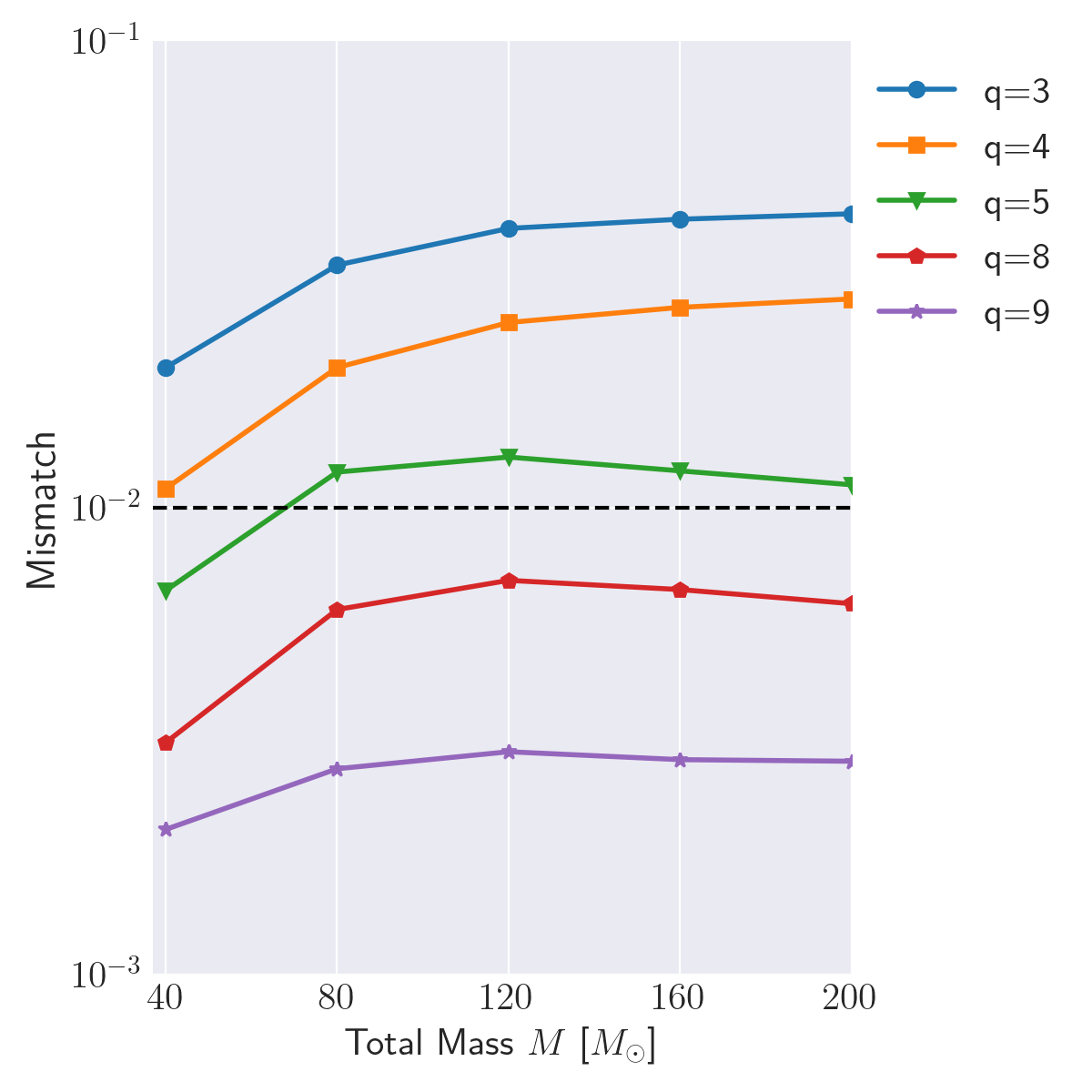
NR-Calibrated Pertubation theory based Non-spinning Waveform Model

Surrogate model for gravitational wave signals from non-spinning, comparable- to large-mass-ratio black hole binaries built on black hole perturbation theory waveforms calibrated to numerical relativity
Publications: arXiv.2204.01972;
Learn more

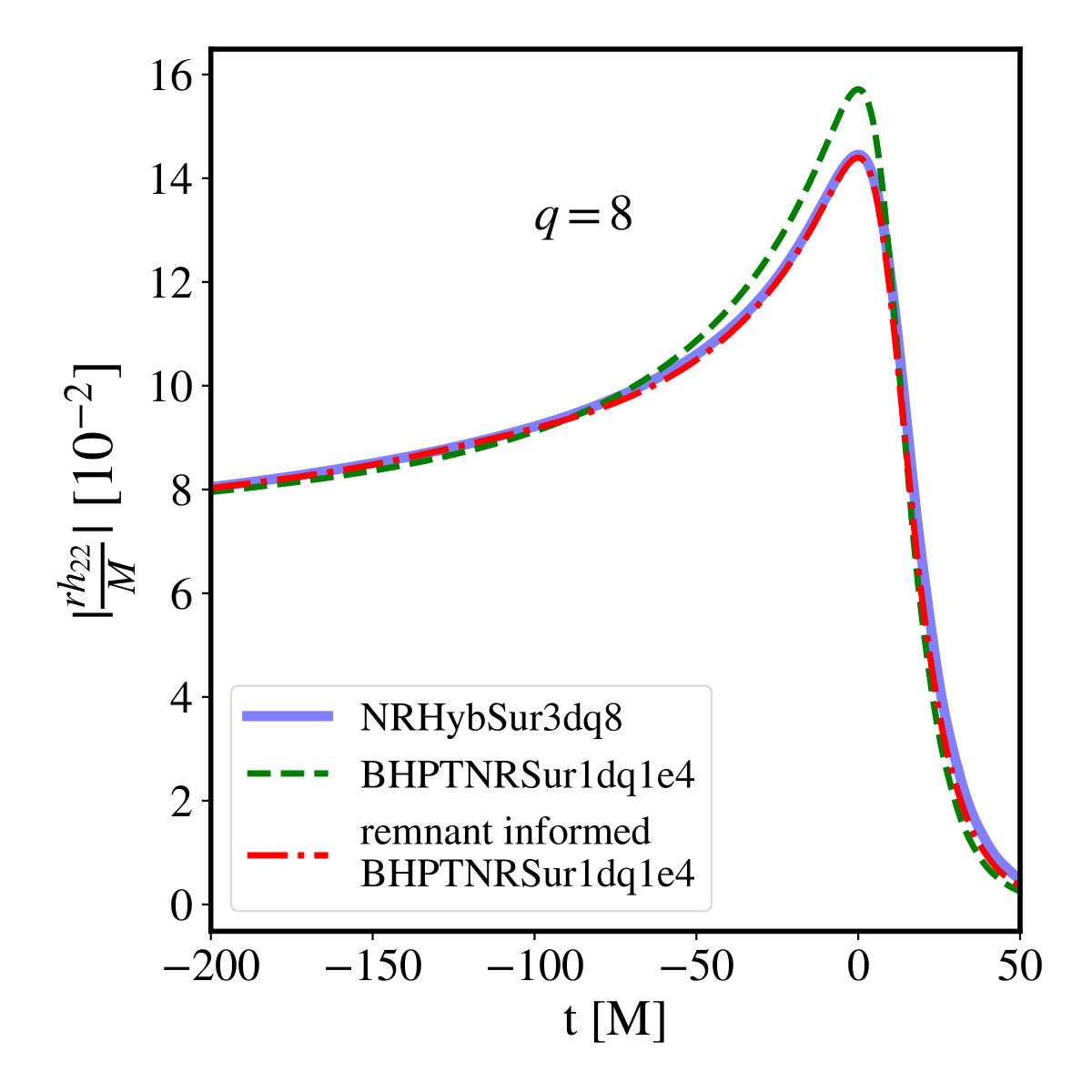
Remnant properties from NR-Calibrated Pertubation theory

Remnant black hole properties from numerical-relativity-informed perturbation theory and implications for waveform modelling
Publications: arXiv.2301.07215;
Learn more

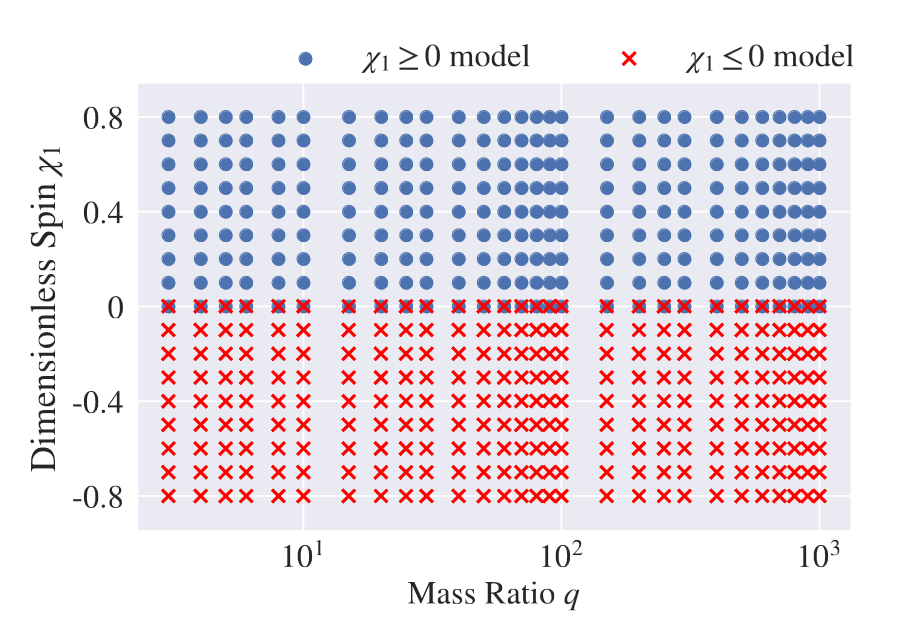
NR-Calibrated Pertubation theory based spinning Waveform Model

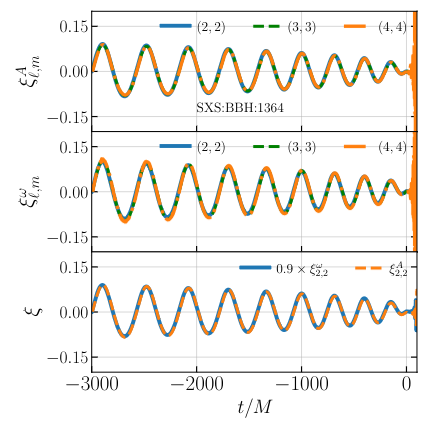
Surrogate model for gravitational wave signals from spinning, comparable- to large-mass-ratio black hole binaries built on black hole perturbation theory waveforms calibrated to numerical relativity
Publications: arXiv.2407.18319;
Learn more

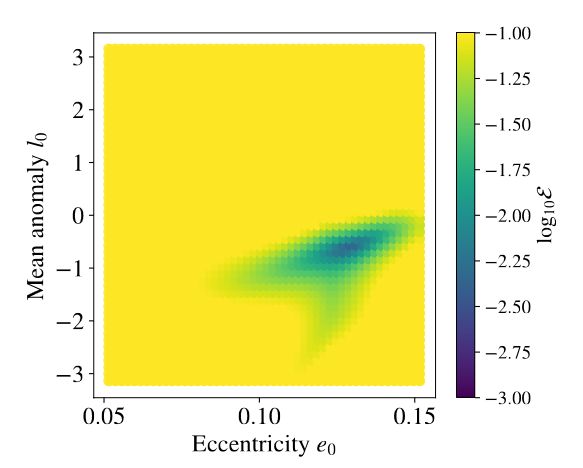
Quasi-universal relation in eccentric non-spinning binary waveforms

Straightforward mode hierarchy in eccentric binary black hole mergers and associated waveform model
Publications: arXiv.2403.15506;
Learn more

Phenomenology of eccentric non-spinning merger waveforms

Study of eccentric binary black hole mergers using numerical relativity and an inspiral-merger-ringdown model
Publications: arXiv.2403.03487;

Learn more

Phenomenology and origin of late-time tails in eccentric binary black hole mergers

We investigate the late-time tail behavior in gravitational waves from merging eccentric binary black holes (BBH) using black hole perturbation theory. For simplicity, we focus only on the dominant quadrupolar mode of the radiation
Publications: arXiv.2407.04682;
Learn more

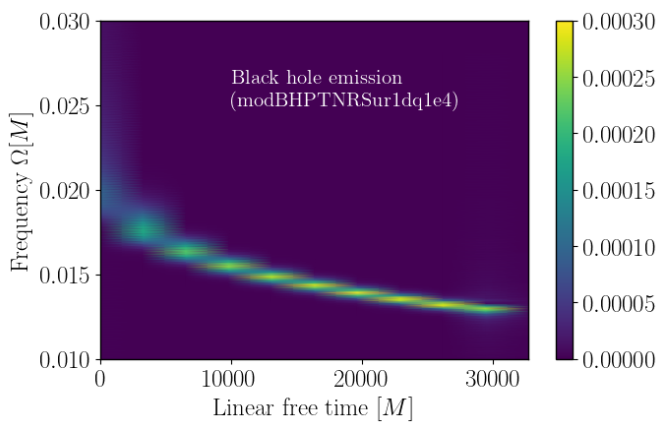
Gravitational waves from black hole emission

Using adiabatic point-particle black hole perturbation theory, we simulate plausible gravitational wave (GW) signatures in two exotic scenarios (i) where a small black hole is emitted by a larger one (`black hole emission') and (ii) where a small black hole is emitted by a larger one and subsequently absorbed back (`black hole absorption').
Publications: arXiv.2407.16989;

Learn more